Online, "going monk mode" often sounds like disappearing: no phone, no friends, no fun. Most people who want it have a job, a family and a need for sleep.
Monk mode is a set period, usually a week to a few months, when you cut back on distractions to work steadily toward one aim. That aim might be finishing a project, preparing for an exam or learning a skill. Monk mode has no official rules or fixed length: you choose the aim, the limits and the end date. This guide shows a calm version of it.
What does monk mode mean?
Monk mode means living like a monastery for a while: a simple routine, fewer distractions, and attention on one thing. People do it to finish something that keeps getting pushed aside, or to break the habit of checking their phone every few minutes.
The phrase has circulated online since at least the late 2000s, and nobody agrees on who started it. Some trace it to entrepreneur blogs, others to gym culture or popular books. Treat it as a shared idea rather than a method with an author and a rulebook.
What are the usual monk mode rules?
The usual monk mode rules are one aim with an end date, limits on phone and social media, and a daily block of focused work. Most guides add a few more:
- One aim and an end date. "Finish the first draft of chapter three by December 20" rather than "be more productive".
- Phone and social media limits. No social media before noon, the phone out of the bedroom, notifications off.
- A daily block of focused work. One to three hours on the aim, at the same time each day.
- The basics. Regular sleep, some movement, real meals.
- Fewer optional commitments. Say no to new side projects until the period ends.
Some versions add strict abstinence rules on top. Include one only if it serves your aim. Pick two to four rules in total, and write each as something you can check at the end of the day. "Phone stays in the kitchen until 10" can be kept or broken, while "use my phone less" can only be argued about.
How long should monk mode last?
For a first monk mode, one to two weeks is a good length. Guides suggest anything from a few days to several months, and 30 days is a common challenge. Tie the length to your aim rather than a round number: the exam date, the deadline, the end of the course.
A short period you finish teaches you more than a 90-day plan you abandon on day nine. You can always run a second period with what you learned.
How do you plan a monk mode period?
Plan a monk mode period by writing down five things before day one:
- The aim, in one sentence with a finish line.
- Why it matters, and what you'll stop or reduce to make room for it.
- Two to four rules, each one checkable.
- What stays. Name the people, rest and health routines you're keeping on purpose, so the plan doesn't quietly squeeze them out.
- A weekly checkpoint: one fixed time each week to look at how it is going and adjust a rule.
For example: For 30 days, finish the course project. Why: it is the last thing between me and the certificate. Stop: evening scrolling. Rules: 90 minutes of focused work before 10 a.m. on weekdays, no social media before noon, lights out by 11:30. Keep: Saturdays with family, two runs a week. This is an illustration, not a real person's plan.
A weekday in that plan might look like this:
- 7:00 Up, no phone until breakfast is done.
- 8:15–9:45 Focused work on the project, phone in another room.
- 10:00 The usual workday, with social media off until noon.
- 18:30 Family time, then a run twice a week.
- 22:00 Two lines in a journal, and the phone charges outside the bedroom.
How do you do monk mode in Monk & Monkey?
Monk & Monkey has no "monk mode" switch. You build the period from parts the app already has, and each part matches a line of your plan. The app's name points at a related idea. The Monk is your rational side, the one that sees the bigger picture and follows through. The Monkey, after Tim Urban's Instant Gratification Monkey, wants the easy reward right now. A monk-mode period lets the Monk set the rules for a while without locking the Monkey out.
- Make the aim a goal. A goal has a timeframe, "Why it matters" and "What to stop or reduce". The timeframe is plain text and the app doesn't count down, so write the end date into it ("30 days, until Dec 20").
- Turn rules into habits. A yes-or-no habit fits "No social media before noon". A limit habit fits something you want to keep under a number, such as 30 minutes of social media a day. You log the limit yourself, because the app doesn't measure phone screen time.
- Hide distracting websites while you work. With the Chrome extension, sites on your Distractions list hide behind a reminder of your task while a focus timer runs. You can make yourself wait a few seconds and then allow a short visit. This works in Chrome only.
- Run the daily block as a focus session. Start a session from today's task, and pause it if you're interrupted. On iPhone with iOS 18 or later, a Control Center button starts your next task or pauses the running one. By default, most of the app's own notifications go quiet while a timer runs. The app doesn't block or silence other apps on your phone.
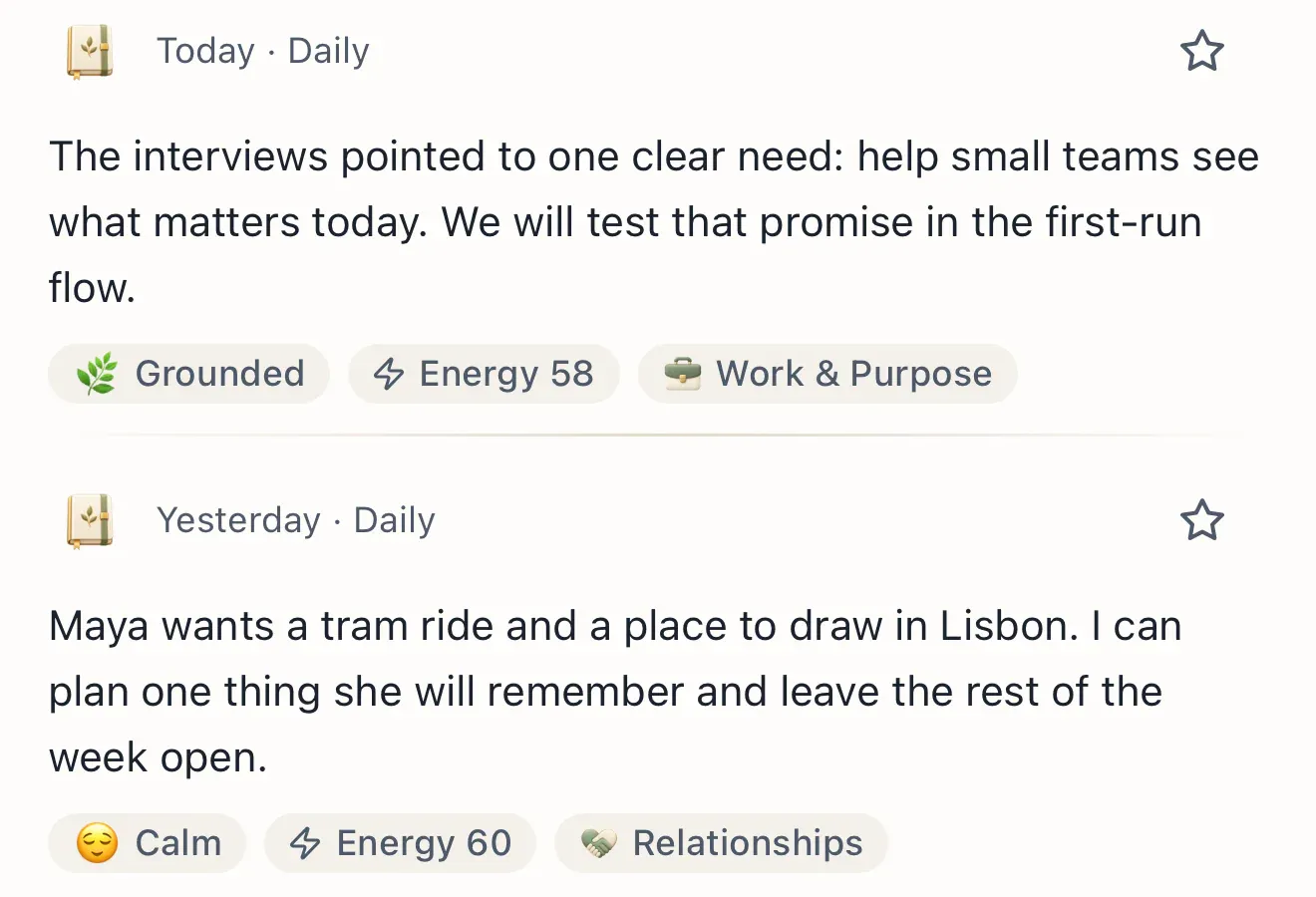
- Close the day in the journal. A sentence or two with mood and energy lets you look back later at how the days with your rules felt.
- Check in weekly. The weekly review shows what moved and what stalled, and lets you pick the monk-mode goal as your focus for the following week.
More about sessions and website blocking is on the focus sessions page. To keep people and rest visible during the period, see how life areas keep the whole picture.
What if you break monk mode?
If you break monk mode, pick it back up the next day instead of restarting the count. A broken rule tells you something: maybe it was too strict, or it collided with something real, like a sick child or a deadline at work. Adjust the rule at your weekly checkpoint and keep going.
In Monk & Monkey, one missed scheduled day doesn't end a habit's streak, and you can pause a habit for a stretch without losing it. If you're away for a few days, "Start from today" on your return moves earlier plans out of Today's list without deleting anything. There's more on this in what to do after missing a day of a habit.
Is monk mode healthy?
Monk mode can be healthy if it protects your sleep, food and the people you rely on. It isn't if it costs you any of them. It is not a health program. If a rule leaves you more anxious or more alone, loosen it. A good period shouldn't leave you depleted at the end.
What's the difference between monk mode and a dopamine detox?
Monk mode points your time at one aim for a period. A dopamine detox is a break from stimulating things, like a day without screens or games, meant to loosen their pull. You can do one without the other. Despite the name, a dopamine detox is a habit change; it doesn't lower or reset your dopamine.
Can you do monk mode with a job or a family?
Yes, you can do monk mode with a job or a family by scaling it down rather than giving it up. Keep one focused block a day and two or three rules at its edges. Write family time into the plan as something you keep. Monk mode is about where your spare attention goes, not about disappearing.
How should you end a monk mode period?
End a monk mode period with a short review of the whole stretch and one decision: which rule you keep. Compare the period with the weeks before and read back through a few journal entries. In Monk & Monkey, Statistics can show any date range, compare it with the previous period, and break time down by goal and life area. Most of what you tried will fade, and that's fine. Keep the one rule that earned its place.