The day starts with six messages, a half-finished task, and one appointment you forgot was today. Every item seems to want the first hour. You could make a heroic list. You probably already have one.
When everything feels urgent, don't try to rank your entire life before breakfast. Make a short plan for the hours you actually have. Identify what is fixed, choose one meaningful move, and leave room to change course. The plan is a working version of the day, not a promise that nothing unexpected will happen.
Start with the time you cannot spend twice
Look at meetings, travel, care, meals, and anything else with a real time attached. Then ask how much usable time remains. An eight-hour workday with four hours of calls is not an eight-hour blank page.
This matters because a long task list can hide a short day. You don't need a perfect estimate for every task. A rough distinction between “I can do this in a small gap” and “this needs a quiet hour” is enough to stop scheduling both into the same fifteen minutes.
Try writing down three things before you choose a task:
- The fixed commitments you must show up for.
- One stretch of time you can actually use.
- One thing that could interrupt that stretch.
That third line isn't pessimism. It's a way to make the plan fit the day you have.
Pick a small working set
Your full list is a place to remember things. Today's list is a place to decide what to do next. They have different jobs.
Choose one task that would make the day feel meaningfully moved forward. Add only the other tasks that fit the remaining time or truly have to happen today. “Reply to the landlord” might belong beside “finish the proposal,” even if the proposal sounds more impressive. A day includes your life, not just your largest work item.
If choosing feels hard, ask yourself what gets more difficult if you leave it until tomorrow. A deadline, a person waiting on you, or a small problem that will grow can give you a clearer answer than the emotional volume of your inbox.
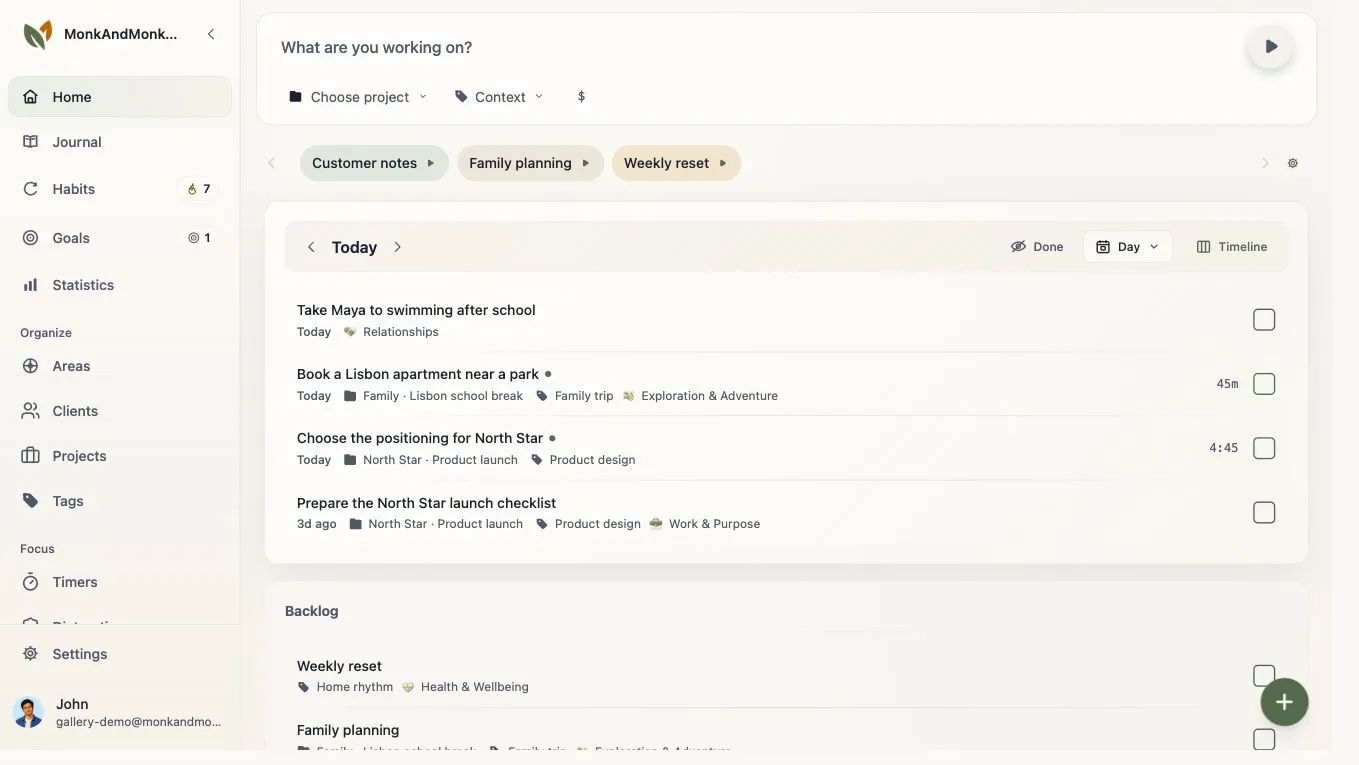
You can keep the rest in Backlog instead of repeatedly carrying it through Today. In Monk & Monkey, the Today view and Backlog give those two lists separate places. Put the few things you intend to act on in front of you, while keeping the others available when the plan changes.
Name the next visible action
“Sort out finances” may be important, but it doesn't tell you where to put your hands. “Open the bank statement and mark the three charges I don't recognize” does. The smaller sentence is easier to start and easier to stop when the available time runs out.
For your main task, write the first action so plainly that you could do it without another planning session. If you cannot, spend five minutes finding the missing information. That is a legitimate first action. It is more useful than staring at a large task title and hoping clarity arrives.
For example, “prepare presentation” could become “list the three questions the audience needs answered.” You have not made the work trivial. You have made its beginning visible.
Decide what changes when the day changes
At midday, check the plan against reality. What is done? What has become more important? What no longer fits? Move an item out of Today if it has lost its place. That is an update, not a verdict on your discipline. The same is true of a habit you missed yesterday.
If an interruption takes the quiet hour you needed, use a short gap for a smaller action, protect a later block, or choose a new day for the larger task. What doesn't help is keeping every task on today's list as if the lost hour still exists.
For each remaining task, decide whether to keep it today, move it, or drop it. Then choose the next action once, rather than renegotiating the whole day every time you look at your list.
Leave yourself a way back in
Before you finish, note the next step for anything unfinished. “Waiting for Mira's figures” or “draft needs one example” gives tomorrow's you a starting point. A bare task title makes tomorrow repeat today's first ten minutes.
Some days will still end with an unticked list. The question is whether the plan helped you make a useful choice when you had one to make. If it did, keep that part. If it didn't, make tomorrow's working set smaller. A plan earns its place by helping you act and adjust, not by predicting every hour.