The day happened. What did you notice?
You finished a few things, postponed others, and learned something in between. A journal entry can hold the part of the day that a task list cannot.
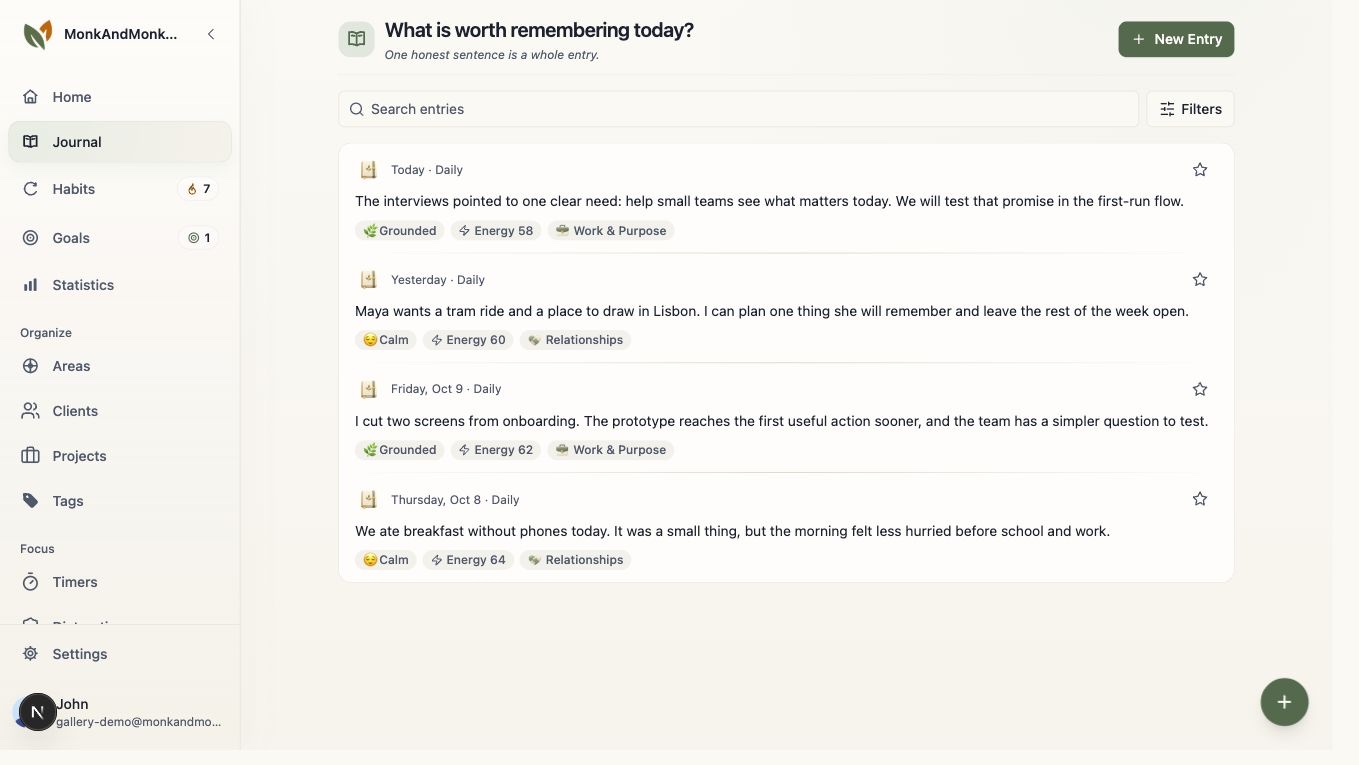
An entry can take a minute
At the end of a crowded day, write what surprised you, what helped, or what you would change tomorrow. “The meeting took longer than I expected, but I finished the outline” is enough. You do not need a polished account or a daily streak. The point is to leave yourself a clue that a completed-task count cannot provide when you look back later.
Ask one useful question
If the page feels too open, try “What changed since this morning?” or “What helped me finish that difficult part?” Answer in your own words. You are recording a clue for your future self, not filling out a performance report.
Write beyond the checklist
A journal can hold a decision, a question or a feeling that would be awkward in a task list. It is a place to think, not another score to improve.
Keep facts and interpretation together
A timer may show a short work session; your entry can explain that you spent the rest of the afternoon helping someone. Neither record needs to override the other. Journal writing is a place to add context and notice patterns in your own words, not a tool that automatically diagnoses a mood, evaluates your performance, or turns every thought into a plan.