Your life is bigger than one list
Work can fill every visible slot while health or relationships quietly wait. Life areas let you name those parts of life and see where your plans belong, without demanding a perfectly balanced day.
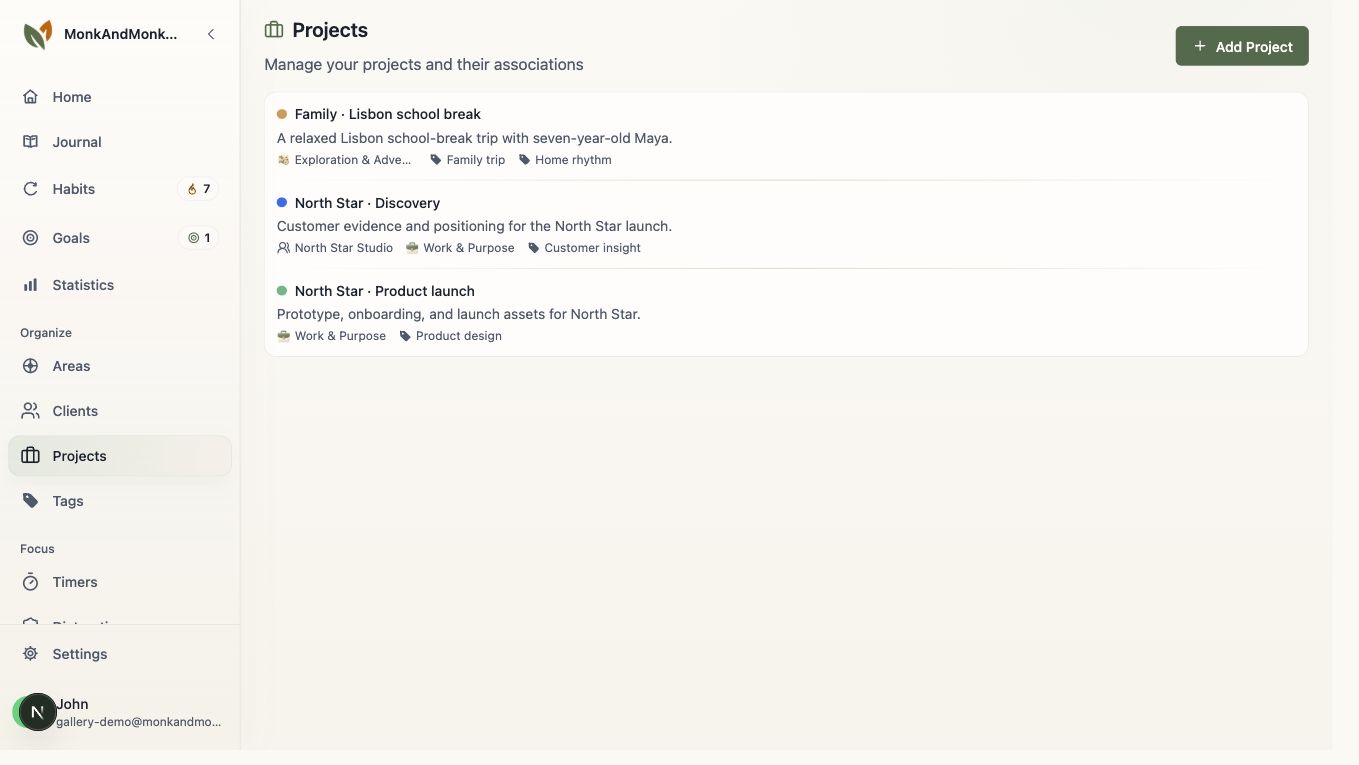
Use areas to spot a missing choice
Imagine a week full of work tasks while your goal to learn a language sits untouched. Put the goal in an area that makes sense to you, such as Learning, and notice whether you want to make room for one concrete action this week. The area does not schedule that action or decide what balance should look like. It simply keeps a part of your life visible beside the urgent work.
Give a plan its wider context
Create an area for a part of life you want to keep in view, then associate a relevant goal or task with it. A learning goal may sit in Learning while a household task belongs in Home. These names are yours to choose; they help you see the purpose around an action, not just its due date.
Give plans their context
Areas help you see where tasks and goals belong in the life you are actually living. They do not need equal shares of your week: a deadline may demand more work time now, while a learning goal stays visible for the next decision you make.
Keep the labels flexible
You do not need the same areas as anyone else, and you can have none. Start with names that help you recognize where a task or goal belongs. If an area becomes irrelevant, hiding it does not unlink the things already associated with it. That matters when your priorities change: you can simplify the view without pretending the earlier chapter never happened.